Do I Qualify for a USDA REAP Grant?
Updated for USDA's October 1, 2026 REAP rule.
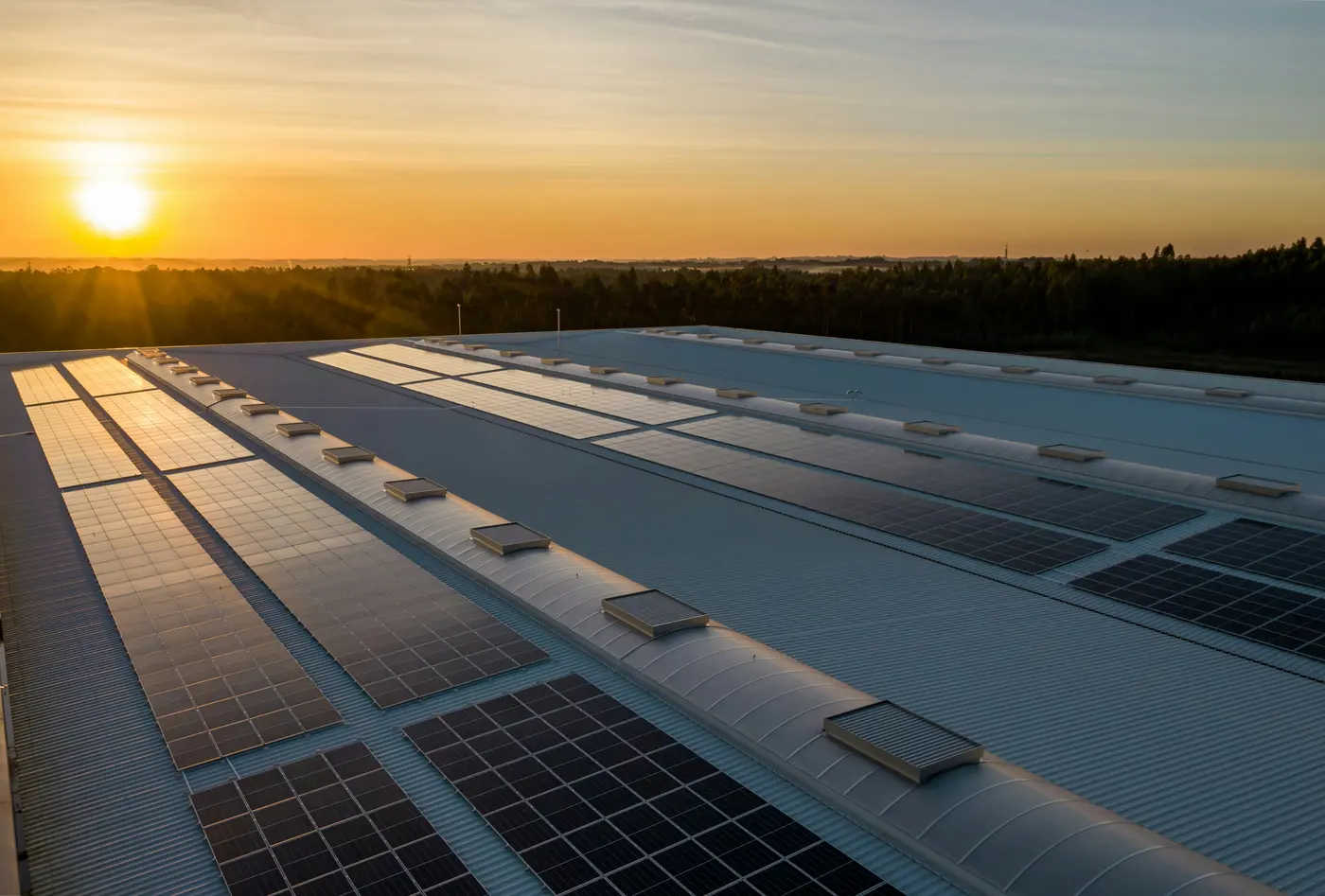
If you’re a rural small business or agricultural producer looking to cut energy costs or invest in renewable energy, you may be eligible for the USDA REAP Grant. This is a powerful federal funding opportunity that covers up to 25% of your project costs. You pay at least 75% of the project cost yourself (7 CFR §4280.122(a)(3)).
USDA published a new REAP rule on October 1, 2026, and it changed who qualifies. The biggest change is timing. REAP now funds projects after they are finished, not before you build (7 CFR §4280.122(a)(1)).
But how do you know if you qualify?
We’ve broken it down into a simple, instant checklist to help you figure out if your project is a good fit and what your next steps should be.
To determine your eligibility, start by confirming the following:
-
You’re a small business located in a rural area that meets SBA size requirements. Rural means not in a city or town of more than 50,000 people, and not in the urbanized area next to one (7 CFR §4280.104). You also need an active SBA profile in SAM.gov that lists you as a small business (7 CFR §4280.120(a)(2)).
-
Or, you’re an agricultural producer. The new rule narrows this. Your operation must be 100% owned by one person, or by one person and their immediate family, or wholly owned by an Indian Tribe. All owners must take part in the day-to-day labor, management, or field operations. The majority owner must earn at least 50% of their income from the farm, based on the most recent complete calendar year (7 CFR §4280.104). Location now matters for farms too. Every project must be in a rural area (7 CFR §4280.122(a)(4)).
If you were able to confirm either of the statements above there’s a good chance you qualify and we can help you take the next steps.
Even if you meet the basic eligibility, there are a few additional details to keep in mind:
-
Your project must already be finished. It must have been completed between 12 and 24 months before you apply (7 CFR §4280.122(a)(1)). For the first application window under the new rule, the project period may have ended up to 36 months before you apply (7 CFR §4280.122(a)(6)).
-
Your project must be technically sustainable (7 CFR §4280.122(a)(8)). An efficiency project needs an Energy Assessment if it cost $80,000 or less, or an Energy Audit if it cost more. A renewable energy project needs a Resource Assessment or a Feasibility Study (7 CFR §4280.131(b)(3)).
-
Your grant request must be between $1,500 and $500,000 for renewable energy, or between $1,500 and $250,000 for energy efficiency (7 CFR §4280.122(a)(2)). The project must also have its own dedicated meter (7 CFR §4280.122(a)(16)).
-
Your business must be organized under state, Tribal, or federal law (7 CFR §4280.120(a)(4)). You must be registered in SAM.gov with a Unique Entity ID, using the “All Awards” option (7 CFR §4280.120(a)(1)).
-
Your most recent fiscal year must show a current ratio of at least 1:1 and a positive cash flow (7 CFR §4280.120(a)(7)).
-
Some projects are no longer eligible. Ground-mounted solar or wind on cropland is out (7 CFR §4280.122(b)(11)). So is a project installed at more than one location (7 CFR §4280.122(b)(10)).
-
Your application will be scored and ranked competitively, so complete and accurate numbers matter. USDA scores applications out of 90 points, with up to 10 more priority points (7 CFR §4280.140(d)). An application needs at least 40 points to be funded (7 CFR §4280.150).
Still not sure if you qualify?
That’s what we’re here for.
We specialize in REAP grant strategy and application support and we offer free consultations to help you:
-
Our eligibility tool will help you confirm your eligibility and help us address any questions to ensure there are no surprises during the application process.
-
Scoring estimations can provide valuable feedback on how to make your project more competitive.
USDA publishes the application dates on its website. Applications are due by 5:00 p.m. Eastern time on the published deadline (7 CFR §4280.133(a)).
Every year, businesses and farms miss out on fundings, not because their projects weren’t eligible, but because they didn’t know where to start. With the right guidance, your project could be next in line for funding.
Book a meeting with our team and we can ensure that your questions are answered and you feel comfortable about the grant requirements.